
Autoimmune conditions can be difficult to understand. Your immune system is designed to protect you. However, with autoimmunity, it begins attacking healthy parts of your own body.
This can affect the joints, skin, gut, thyroid, pancreas or nervous system. Examples include rheumatoid arthritis, lupus, multiple sclerosis, psoriasis and type 1 diabetes.
Researchers are now investigating whether molecular hydrogen may help regulate some of the inflammation involved in these conditions.
The early results are encouraging. However, molecular hydrogen is not a proven cure for autoimmune disease. It should be viewed as a possible support—not a replacement for medical care.
What is molecular hydrogen?
Molecular hydrogen is simply two hydrogen atoms joined together. Its scientific name is H₂.
It is the smallest molecule in existence. This allows it to move quickly through the body and enter areas larger substances may struggle to reach.
Molecular hydrogen can be delivered by drinking hydrogen-rich water. It can also be inhaled as a gas under properly controlled conditions.
Once inside the body, molecular hydrogen appears to influence oxidative stress, inflammation and cell signalling. These three processes are closely connected to immune health.
The interesting point is that molecular hydrogen does not appear to switch the entire immune system off. Instead, research suggests it may help an unbalanced immune response behave more normally.
Autoimmunity is not simply an “overactive” immune system
People often describe autoimmune disease as an overactive immune system. That description is only partly correct.
The deeper problem is poor regulation.
The immune system may attack the wrong target. It may continue reacting after a threat has passed. It may also produce far more inflammation than the situation requires.
Think of it as a smoke alarm that has become too sensitive. Instead of responding only to a real fire, it sounds whenever someone makes toast.
The ideal response is not to remove the smoke alarm. We still need protection. The goal is to help it recognise the difference between toast and a house fire.
This is where molecular hydrogen becomes interesting.
Studies suggest molecular hydrogen may help influence the chemical signals that control inflammation. Scientists call this effect “immunomodulation.” In plain English, it means helping the immune system respond in a more balanced way.
Molecular hydrogen and inflammation

Inflammation is an essential part of healing. It helps the body respond to injury and infection.
The trouble begins when inflammation becomes chronic.
Long-term inflammation can damage healthy tissue. It can also contribute to pain, fatigue, swelling and many other symptoms associated with autoimmune conditions.
Research suggests molecular hydrogen may influence several inflammatory messengers. These include TNF-α, IL-1β and IL-6. These chemical signals help coordinate an immune response, but excessive amounts can keep inflammation running.
Molecular hydrogen has also been studied for its effect on NF-κB. This is sometimes described as a master switch for inflammation.
This does not mean molecular hydrogen simply blocks every inflammatory process. That would not be desirable. We need inflammation at the right time and in the right amount.
The evidence suggests molecular hydrogen may help turn down unnecessary inflammation while supporting the body’s normal defence systems.
Oxidative stress also matters
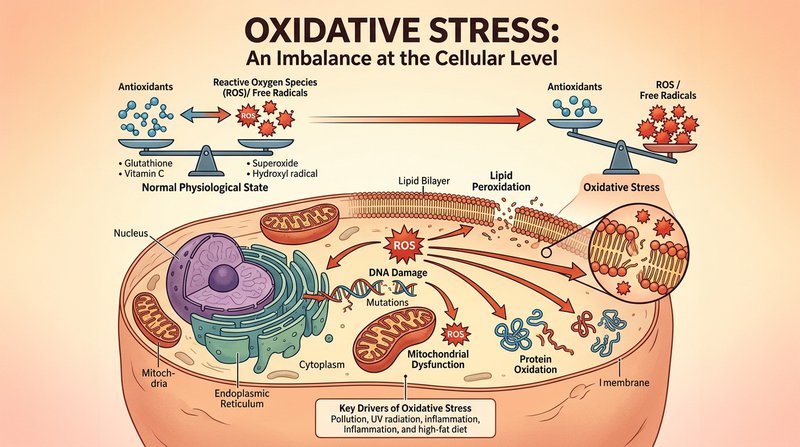
Our cells naturally produce unstable molecules called free radicals.
Free radicals are not automatically bad. The body uses some of them for communication and defence. Problems develop when too many accumulate and the body cannot control them.
This imbalance is called oxidative stress.
Oxidative stress can damage cell membranes, proteins and DNA. It may also stimulate inflammation and disturb normal immune regulation.
Molecular hydrogen appears to reduce some of the most damaging forms of oxidative stress. It may also activate the body’s own antioxidant defences, including a pathway known as Nrf2.
This distinction is important.
Molecular hydrogen does not appear to act like a large dose of a conventional antioxidant. It seems to help the body restore its own balance without removing every useful oxidant.
That may explain why researchers are studying molecular hydrogen in many different inflammatory conditions.
Could molecular hydrogen support gut health?

Much of the immune system communicates with the gut.
The intestinal lining acts as a carefully controlled barrier. It allows nutrients to enter the body while helping keep unwanted substances inside the digestive tract.
When this barrier becomes damaged, bacterial fragments and other substances may pass into the bloodstream. The immune system can interpret these substances as threats, creating more inflammation.
Molecular hydrogen has been studied in experimental models of colitis and intestinal injury. Results suggest it may help protect the intestinal lining, reduce oxidative stress and support a healthier balance of gut bacteria.
Some studies also suggest hydrogen-rich water may encourage bacteria that produce butyrate.
Butyrate is a short-chain fatty acid that feeds cells lining the colon. It also supports the intestinal barrier and helps regulate immune tolerance.
In simple terms, a healthier gut may send fewer false alarm signals to the immune system.
Most of this research is still experimental. For example, encouraging results in mouse models of colitis cannot automatically be applied to people. Nevertheless, the gut connection gives researchers another reason to examine molecular hydrogen carefully.
What has human research found?
Human evidence remains limited, but it is beginning to develop.
One small pilot study examined hydrogen-rich water in people with rheumatoid arthritis. Researchers reported reductions in oxidative stress and disease activity. However, the study was small and did not provide the level of evidence needed to establish molecular hydrogen as a treatment. Read the rheumatoid arthritis study
Another small randomised pilot study investigated hydrogen-enriched saline in rheumatoid arthritis. The results were promising, but larger and longer clinical trials are still required.
Much of the other autoimmune research comes from cells and animals. These studies can reveal possible mechanisms, but they cannot prove that people will receive the same benefits.
This is why we should remain interested without getting carried away.
Is molecular hydrogen safe?
Molecular hydrogen has shown a good safety record in published research when delivered correctly.
It does not accumulate in the body. Unused hydrogen leaves mainly through breathing.
However, the delivery system still matters.
A poorly made hydrogen device may introduce unwanted contaminants or fail to produce the advertised concentration. Hydrogen inhalation also requires equipment designed and tested for that purpose.
Anyone with an autoimmune condition should discuss molecular hydrogen with their doctor. This is especially important when taking immune-suppressing medication or receiving other treatment.
A worsening symptom should never automatically be dismissed as a “healing reaction.” It may indicate that the dose, product or approach is unsuitable—or that something unrelated requires medical attention.
Molecular hydrogen is promising, but it is not magic
Molecular hydrogen is attracting attention for good reasons.
Research suggests it may help regulate inflammation, oxidative stress, immune-cell activity and gut health. These are all important parts of autoimmune disease.
However, promising biological effects do not equal a proven medical cure.
We need larger human trials before anyone can say exactly which autoimmune conditions may benefit, what dose works best and how molecular hydrogen should be combined with established treatments.
For now, the most sensible conclusion is straightforward.
Molecular hydrogen may become a useful companion to conventional care. It should not replace diagnosis, medication or professional guidance.
The goal is not to shut the immune system down. The goal is to help it protect the body without attacking the body.
That possibility makes molecular hydrogen genuinely worthy of further research.