

TL;DR
A plain carbon filter is usually sufficient when your main concern is chlorine, unpleasant taste or odour. A well-designed alkaline water filter goes further by combining contaminant reduction with mineral addition and a moderately higher pH. Choose according to your source water, independently supported performance, cartridge cost and the result you actually want—not the largest pH number on the box. For households seeking filtration, alkaline minerals and molecular hydrogen in one non-electric system, AlkaWay’s UltraStream is my preferred option. It costs more than a basic carbon jug, but offers a more complete drinking-water experience and long-term Australian product support.
Begin with your water—not the filter advertisement

Choosing between a carbon filter and an alkaline water filter becomes easier when you ask, “What do I want to change about my water?”
Perhaps your tap water smells of chlorine. Maybe its taste discourages your family from drinking it. You may be concerned about specific contaminants or want mineralised alkaline water that resembles good spring water.
These are different goals. A carbon jug may solve the first without solving the others.
Obtain your supplier’s water-quality report before buying. For rainwater, bore water or water of uncertain microbiological quality, arrange suitable testing. Neither filter type is a universal purifier.
What does a plain carbon filter do?
Activated carbon is porous. As water passes over it, selected compounds attach to its internal surface through adsorption.
The US Environmental Protection Agency says granular activated carbon can reduce taste- and odour-producing compounds, natural organic matter, volatile organic compounds and some synthetic organic compounds. This can produce fresher-tasting water where chlorine is the main complaint.
Carbon filters come as jugs, tap-mounted units and under-sink cartridges. Their advantages are simplicity, affordability and widely available replacements.
For treated town water with an unwanted chlorine taste, a reputable carbon filter may be sufficient. You’ll need to check if your supply also has chloramines because not all carbon filters work to remove this nasty.
The limitations of carbon alone
“Activated carbon” does not mean every filter performs equally. Carbon type, quantity, flow rate and contact time influence the result. A small, fast cartridge may not equal a larger multi-media system.
Carbon does not remove everything. Performance varies for minerals, salts, metals, fluoride, nitrate and microorganisms. Some systems add ion exchange, catalytic media or membranes to broaden contaminant reduction.
Read test data for the exact model. Check its capacity, flow rate and contaminants tested. Replace the cartridge on schedule; exhausted carbon cannot keep performing as it did when new.
What is an alkaline water filter?
An alkaline water filter normally filters unwanted substances, then raises mineral content and pH using materials such as calcium- and magnesium-based media.
This differs from adding alkaline powder to unfiltered water. A responsible system improves the starting water before adding beneficial minerals.
An electric ioniser instead uses electrolysis to divide suitable input water into alkaline and acidic streams. Its performance depends on source-water minerals, and it still needs effective pre-filtration.
A non-electric alkaline water filter uses cartridge media to filter and mineralise without power, electronic plates or wastewater.
Do not buy alkaline water by pH alone
pH indicates how acidic or alkaline a liquid is. It does not reveal the contaminants removed, minerals present or quality of product testing.
Be cautious when extremely high pH is the main selling point. The lungs and kidneys tightly regulate blood pH. Alkaline water does not simply “alkalise the whole body.”
A published evidence review found that research had not established additional general health effects from alkaline water compared with mineral water. This does not remove its practical value; it means we should favour filtration, minerals and taste over miracle claims.
Moderately alkaline mineral water is a more sensible everyday goal than chasing the highest number.
When should you choose a carbon filter?
A plain carbon filter is probably the better-value choice when:
- Your treated town water already meets required standards.
- Chlorine taste or odour is your main concern.
- You want the lowest initial cost.
- You are satisfied with the existing mineral content and pH.
- You will reliably refill the jug or replace the cartridge.
There is nothing inferior about choosing the simpler tool when it matches the job. Spending more for alkaline water you do not particularly want makes little sense.
When does an alkaline water filter make more sense?
Consider a quality alkaline water filter when:
- You want broader filtration than a basic carbon jug provides.
- Your water tastes flat after heavy filtration or contains few minerals.
- You prefer naturally mineralised, moderately alkaline water.
- You want a convenient benchtop or under-sink system for the whole family.
- You are interested in molecular hydrogen as a feature separate from pH.
That final point matters. Alkaline water and hydrogen-rich water are not identical. pH measures acidity or alkalinity; dissolved H₂ measures molecular hydrogen. A system may produce high-pH water with little hydrogen, or hydrogen-rich water without an extreme pH.
Why UltraStream is my preferred all-in-one option
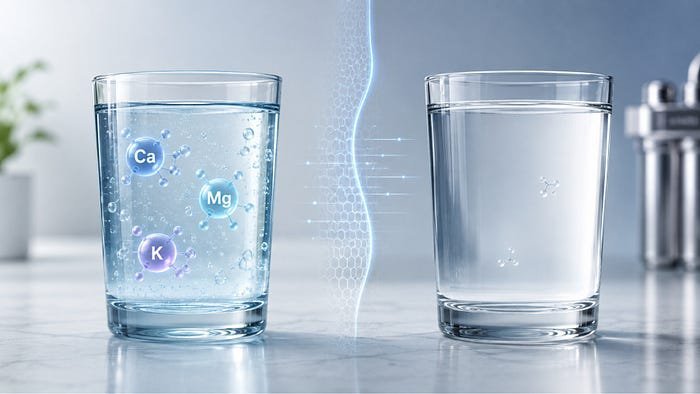
The AlkaWay UltraStream contains carbon within a multi-layer cartridge designed to reduce chlorine and other unwanted substances while adding alkaline minerals and generating molecular hydrogen.
It operates without electricity or a reject-water stream. Benchtop and under-sink versions allow households to choose according to their kitchen.
Its advantage is integration: filtration, alkalisation and hydrogen-water production in one replaceable system.
AlkaWay has specialised in alkaline water, filtration and molecular hydrogen for more than 26 years. Australian support helps with compatibility, source-water conditions, flow and replacements.
UltraStream costs more than a carbon jug because it does more. Its value depends on what you want from every glass.
Compare lifetime cost—not just purchase price

Calculate the cost per litre over a cartridge cycle, including filters, delivery, installation and any required pre-filter.
Higher prices can prove cheaper when capacity is greater and replacement intervals are longer.
Consider convenience. A cheap jug that is always empty provides little value. A tap-connected alkaline water filter can serve drinking, cooking, tea and reusable bottles.
Ask who supports the product, whether replacements will remain available and whether test performance applies across the cartridge’s working life.
My conclusion
Choose catalytic carbon for an affordable improvement in chlorine and chloramine affected taste and odour. It is a reasonable solution for many homes.
Choose an alkaline water filter when you want filtration plus purposeful mineralisation. Judge complete performance, not pH alone.
For filtered, mineralised alkaline water with molecular hydrogen, UltraStream is my preferred choice. It combines carbon, additional filtration media, alkaline minerals and hydrogen generation without electricity.