

Why your water smells, and what is really going on
If you’ve noticed a “rotten-egg” or sulfur smell from your filtered water especially when using a filter you’re not imagining it. That smell almost always comes from Hydrogen sulfide (H₂S) gas. The source? Bacterial by-products: certain bacteria in your plumbing often referred to as “sulfate-reducing bacteria” or sulfur-producing bacteria generate H₂S under the right conditions.
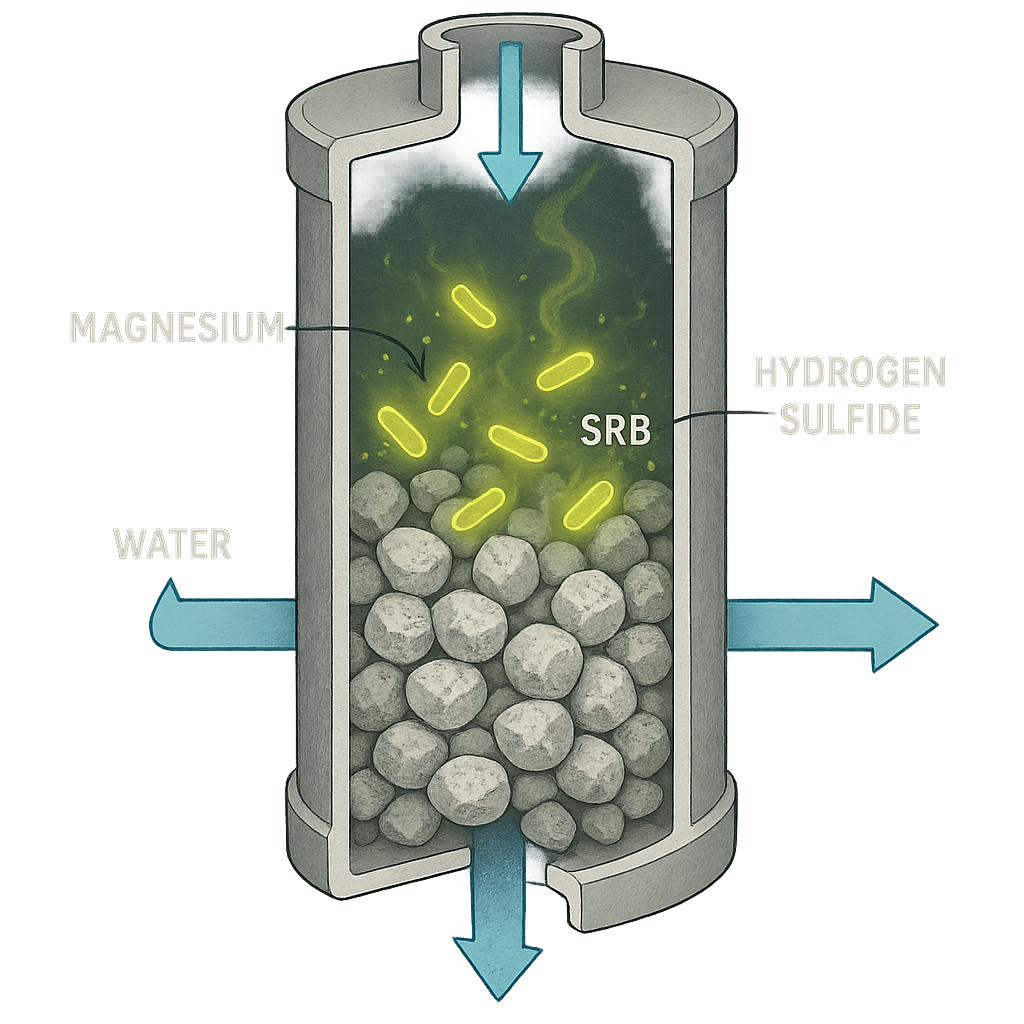
In many cases, the problem doesn’t arise from the water supply itself. Instead, the odor appears when water interacts with magnesium or other reactive elements inside a filter. The magnesium may trigger a chemical (or possibly biological) reaction with the sulfate-producing bacteria and that reaction leads to the foul smell. Your observation that the odor is “localized” (only when using a particular filter, or only from certain taps/pipes) matches what many sources describe as a common pattern.
Can I just change the filter?
A simple replacement of the filter alone often will not solve the problem. Because the underlying cause is the presence of bacteria (and chemical conditions that allow H₂S to form), the smell can return, even with fresh filters.
What the Science says
Under the umbrella of drinking-water safety and regulation in Australia, the official guidelines, such as the Australian Drinking Water Guidelines (ADWG) recognise that tastes and odours may result from bacteria (or other organisms) producing odorous compounds when conditions become stagnant or anoxic (low oxygen). In plumbing systems, especially in “dead-ends,” storage tanks, or slow-flow sections, sulfate-reducing bacteria may thrive, producing hydrogen sulfide gas.
The ADWG notes that typical sulfate concentrations in Australian reticulated (municipal) supplies vary widely (from ~1 mg/L up to ~240 mg/L depending on region). Under the “right” conditions (low oxygen, stagnation, biofilm presence), that sulfate can be reduced to sulfide.
There is no comprehensive public map of sulfur producing bacteria prevalence across Australia’s municipal water supplies. Australian drinking-water supplies have not been routinely monitored for hydrogen sulfide.
Because this bacteria are often part of “nuisance organisms” or biofilm communities (rather than regulated pathogens), and because odor/taste issues are considered “aesthetic” rather than health-based in this context, there is no mandatory reporting or tracking of their presence in municipal water, especially after water leaves the treatment plant and enters distribution or household plumbing.
Why you will notice this more in Summer?
Summer groundwater warms up, pipes and tanks stay warmer, this is a perfect growth time for bacteria. If you live in a humid environment, then there is more condensation in pipes, the filter housings become moist and slow flowing water in summer gets warmer and with the summer storms there is increased organic material in the supply lines, which means more bacteria all round. These are all ideal environments for bacteria to flourish. In Australia, this is common, especially in QLD, NSW, NT and WA.
So yes – summer conditions = faster bacterial activity = more sulfur smell.
Bottom line: even if you’re on municipal water (not a private well), if parts of your plumbing system or a section of pipe provide low-oxygen, low-flow, or reactive metal/chemistry conditions, the bacteria can colonize and produce H₂S.
That helps explain why you might only smell it from certain taps, only after certain types of filtration, or only some of the time.
Why a Pre-Filter Such as KDF‑85 Can Help Where a Replacement Filter Won’t?
Because the issue arises from hydrogen sulfide (and often bacterial activity), many water-treatment experts recommend the addition of a pre-filter using a copper-zinc alloy namely KDF-85.

KDF-85 media works via a redox (oxidation-reduction) reaction: when water containing hydrogen sulfide passes through KDF, the media causes a chemical transformation, converting H₂S into insoluble copper sulfide (or other harmless compounds), which can then be filtered out or flushed from the system. In doing so, it not only removes the “rotten-egg” smell but also helps control growth of bacteria, fungi, and algae inside your filter system limiting the biofilm that fosters more sulfide production.

Other recommendations
Keep water moving, avoid long stagnation, flush for a few minutes if unused for a while.
Consider installing a pre-filter such as the copper-zinc media, or other H₂S-targeting media upstream of any other main filter or main water outlet.
If the problem persists, and especially if multiple water outlets smell, consider consulting a plumber or water-quality specialist and consider lab-based microbial or water-chemistry testing.
If you need help, have questions about sulfur bacteria, or want guidance on choosing the right filtration setup for your filter, feel free to call us or contact us at info@alkaway.com.au we’re always happy to help.