

An electric water ioniser is not independent of the water passing through it. Its performance depends on that water’s chemistry.
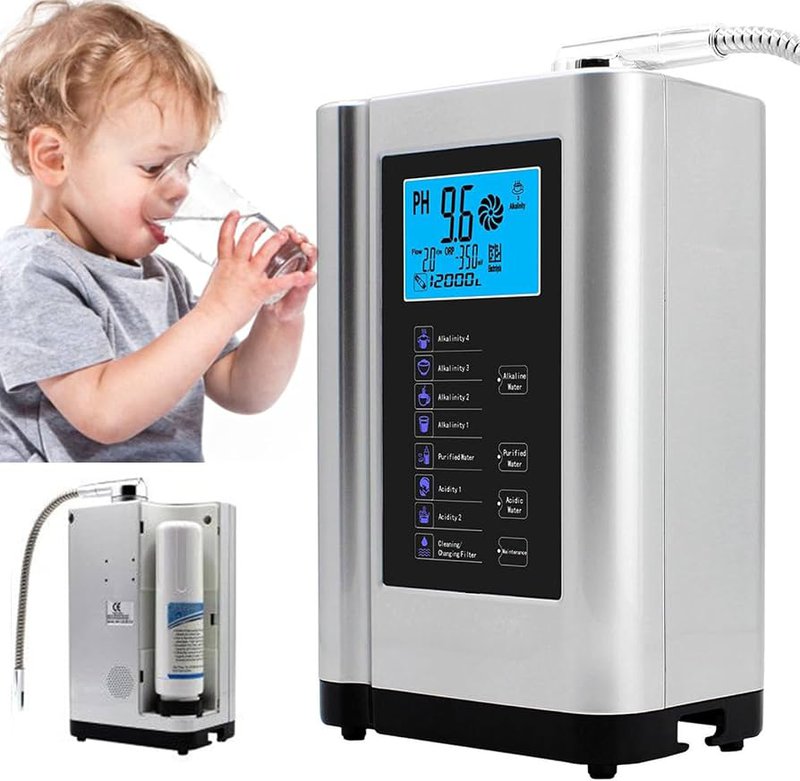
Too little electrical conductivity can limit electrolysis. Too much scale-forming mineral content can foul the electrodes and restrict water flow. And a machine can produce an impressive pH reading without necessarily producing an impressive concentration of dissolved hydrogen.
The important qualification is this: TDS matters, but TDS alone cannot tell us whether water suits a particular ioniser.
First, what does TDS actually measure?
TDS means total dissolved solids, usually expressed in milligrams per litre, or approximately parts per million for drinking water.
It includes dissolved substances such as calcium, magnesium, sodium, chloride and bicarbonate. Most inexpensive TDS meters do not identify or weigh these substances. They measure electrical conductivity and convert that reading into an estimated TDS value. The conversion depends on the water’s composition and temperature.
Four different measurements are worth keeping separate:
| TDS | The total amount of dissolved material, or a conductivity-based estimate |
|---|---|
| Electrical conductivity | How readily the water carries electrical current |
| Hardness | Mainly the calcium and magnesium content associated with scale formation |
| Alkalinity | The water’s capacity to neutralise acid—not simply its pH |
Two supplies can have the same TDS but behave differently.
One might contain substantial calcium and bicarbonate. Another might contain more sodium and chloride. The first may present a scaling problem; the second a salinity problem. One number does not describe the whole mixture.
Why an Ioniser needs suitable conductivity
Conventional drinking-water ionisers pass current between electrodes through water containing dissolved ions. These ions help carry the current.
At the negative electrode, electrolysis produces hydrogen gas and hydroxide ions. The hydroxide raises the pH; some of the hydrogen dissolves in the water. The amount retained depends on the machine, operating conditions and electrode condition.
The minerals do not become hydrogen. The hydrogen comes from water. The dissolved ions help the electrical process take place.
Inadequate conductivity = inadequate ionization. The only alternative you have is a different water source.
What happens when TDS is too low?
Very low-mineral water—such as distilled water or some reverse-osmosis permeate—can have insufficient conductivity for a conventional flow-through ioniser.
Possible consequences include:
- Reduced electrolysis. At a given voltage, less current passes through poorly conducting water.
- Difficulty reaching the intended output. The machine may struggle to achieve its expected pH separation or hydrogen production at the specified flow.
- A need for approved pretreatment. Some installations require manufacturer-approved remineralisation or another source-water adjustment, adding expense and maintenance.
So you are adding minerals to an ionizer that then takes them out again. Not clever.
Some sellers acknowledges that low levels of electrolytic minerals can reduce electrolysis efficiency.One sighted manual also identifies low source-water hardness as one reason the expected alkaline pH may not be obtained.
However, “low TDS means the pH cannot rise” is too simplistic.
Water with little buffering can show a substantial pH change after relatively little chemical change. Consequently, a high pH reading in low-mineral water does not prove substantial mineral content, strong buffering or high dissolved hydrogen.
Nor does low TDS automatically mean the water is unhealthy. Unsuitable for a particular appliance is not the same as unsuitable for drinking.
What happens when TDS is too high?
The answer depends on what is making it high.
1. Hardness can coat the electrodes
In calcium-rich water, the alkaline conditions near the negative electrode encourage mineral deposits.
Scale can reduce effective electrode performance and interfere with hydrogen dissolving into the water. Importantly, hydrogen output can decline while the water remains alkaline. Checking pH alone can therefore miss deteriorating performance. A published review of electrolysed water specifically discusses this limitation.
A shiny screen cannot tell you whether the plates behind it are wearing a mineral overcoat.
2. Deposits can restrict water flow
Mineral accumulation can also affect internal passages and outlets.Some support material describes mineral crystallisation on electrolysis plates and associated maintenance requirements.
The practical consequences can include more frequent cleaning, reduced flow and additional servicing costs. Automatic cleaning is useful, but should not be treated as a guarantee that scale cannot accumulate.
3. Output pH may exceed expectations
More conductive water can behave differently at the same power setting. But buffering, starting pH, flow and machine controls also influence the result.
Some suppliers note that mineral-rich source water can produce water with an unexpectedly high pH. This is why the selected setting should be checked against the actual water produced. The pH shown is indicative only. Always use a pH kit test.
4. Salt-rich water creates different concerns
High sodium and chloride levels are not the same problem as calcium scale. Chloride can participate in reactions that produce chlorine species at the positive electrode.
That does not establish that a correctly operating ioniser’s drinking outlet is contaminated. It does explain why adding table salt simply to increase TDS is not a sensible general-purpose fix. Use only additives expressly approved for the exact model and operating mode.
Tyent’s UCE-E13T manual warns against excessively hard water and saltwater, citing malfunction and shortened product life. It also advises consulting the supplier about very high-TDS water and possible pretreatment.
So, what is the correct TDS?
There is no single ideal TDS range for every electric water ioniser.
The appropriate specification must account for the machine’s design, conductivity, hardness, alkalinity and intended operating conditions. A supplier should provide written requirements for the exact Australian model. If not, he really shouldn’t be selling.
Australia’s drinking-water guidance recommends TDS no higher than 600 mg/L for good palatability. That is a taste guideline—not an ioniser operating specification, a health threshold or proof that everything below it is safe. Individual contaminants need their own assessment.
What should potential buyers and owners do?
Before installation:
- Test the water that will actually enter the ioniser, after any existing treatment.
- Check conductivity/TDS, hardness, alkalinity and pH. Investigate specific contaminants where relevant.
- Ask the supplier to confirm compatibility and any required pretreatment in writing.
- Establish baseline output pH and, if hydrogen is a selling point, measure dissolved hydrogen separately using an appropriate method.
- Follow the model’s cleaning schedule and recheck performance when the source water changes.
A carbon filter should not automatically be assumed to correct high TDS or hardness. Likewise, reducing TDS through reverse osmosis may solve one problem while creating a conductivity issue for the downstream ioniser.
An important distinction from hydrogen inhalation equipment

Do not transfer this advice to every hydrogen-producing appliance. Some PEM hydrogen generators are designed to use very low-TDS, distilled or deionised water. Adding minerals can be inappropriate for those systems.
The correct water is the water specified for that particular technology.
The bottom line
An ioniser should be matched to the water supply—not merely connected to it.
Too little conductivity can limit performance. Excessive hardness can increase scaling and maintenance. High salinity brings different concerns again.
Before comparing plate counts, pH promises or price tags, ask the less glamorous question: “Will this machine work properly with my water?”