
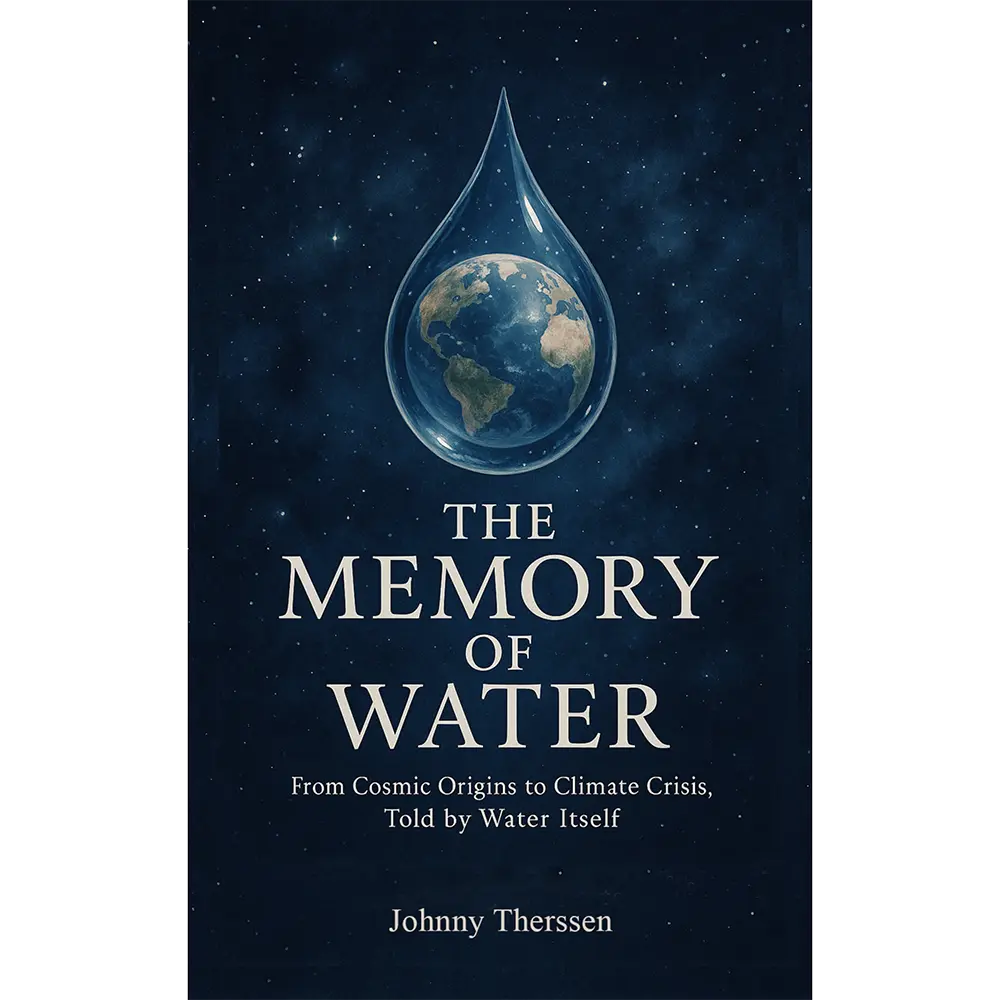
 From Cosmic Origins to Climate Crisis, Told by Water Itself.


In the winter of 2020, Melbourne went quiet. For 111 days, the city held its breath; streets were empty, cafés shut, and the skies monitored by the low hum of police helicopters. The world had shrunk to an hour outside, a rationing of freedom. The usual life of St Kilda: joggers, backpackers, kids chasing each other, tourists snapping photos of the pier, had disappeared. The silence was unsettling. Even the nearby roads, normally alive with trams and cars, only emitted the occasional engine’s murmur. Walking through, you might feel both peace and unease: peace in the solitude, the rare gift of Melbourne’s bayfront emptied of crowds; unease in how the world seemed paused, uncertain, as if the city were holding its breath. The people you passed, spaced carefully apart, kept their eyes down. The beach was a threshold space: open, wide, cleansing, but edged by the realisation that beyond its horizon, the entire world was in the same suspended state. Every gust of wind seemed to whisper both fragility and resilience. It was beautiful, and strangely haunting.
Every day, I walked along the bay. From Elwood, following the curve of the sand, past St Kilda to Middle Park, sometimes even further to Port Melbourne. At first, it was to move, to breathe in the air, to stretch, to stand before the wide horizon when everything else felt closed in. But gradually, the quiet started to press closer. Not just the absence of noise, but the presence of something deeper. Something waiting. The beach was almost deserted. My footsteps met only damp sand, gulls cried into grey wind, halyards clinked against idle masts. The bay, metallic and restrained, moved with a patience I could not put a name to. It was then that I began to notice a presence beside me, steady as the tide. Not a voice in the usual sense, but something older, unhurried, rising like water itself. Some mornings it came with the silver wash of dawn, others in the salt carried on the wind. It did not rush. It did not insist. It simply waited until I was still enough to hear.
One day near St Kilda Pier, as the sun struggled through the clouds, I felt it unmistakably. Not in my ears, not in my head, but somewhere between sensation and knowing. Water spoke. It carried stories in its silence: of mountains worn down, of rains returning, of lives cradled and lost. It did not ask for anything, yet I felt its trust settle in me like a weight: remember, protect, speak. After that, the world looked different. I saw the tide as handwriting, scrawling and erasing its own letters at the shore. I felt the bay breathing under the wind, like skin under touch. Pelicans drifted across the water like old prophets, untroubled by the strange hush of the city. I went home changed, though I could not yet say how. A vow had been made without words. I began to listen differently, to the drip from branches after rain, to the murmur of drains, to the laughter and grief in moving water. Sometimes I heard nothing at all. But when I did, I wrote. Not as a scientist, though science has its own truths. Not as a poet, though the words often arrived like poems. Not as a saviour, for water never asked to be saved. But simply as someone who had finally learned to listen.
This book is the result of that listening. A story, a weaving, a remembering. A myth, a meditation, a conversation as old as rivers. If you have ever paused by a stream, or lifted your face to rain, or cupped a glass and felt something stir, however fleeting, then you are already part of this story. Do not read this book as you would a report. Wade in it. Drift. Skip a stone. Sit awhile. And let the voice that came to me now reach you. Because water remembers, and water waits.

“I absolutely loved The Memory of Water. It completely changed the way I think about water and our connection to it. The book is beautifully written and made me stop and reflect on how something so simple can play such an important role in our health, emotions, and everyday lives.
What I loved most was how it blended science, nature, and deeper reflection in a way that felt inspiring rather than overwhelming. It’s one of those rare books that stays with you long after you finish reading it.
I genuinely believe everyone should read this book, especially in today’s busy world, where we often forget the importance of the water we drink and the connection we have with the natural world around us.”
Powerful, thought-provoking, and unforgettable. Memory of Water is the kind of book everyone needs to read.