
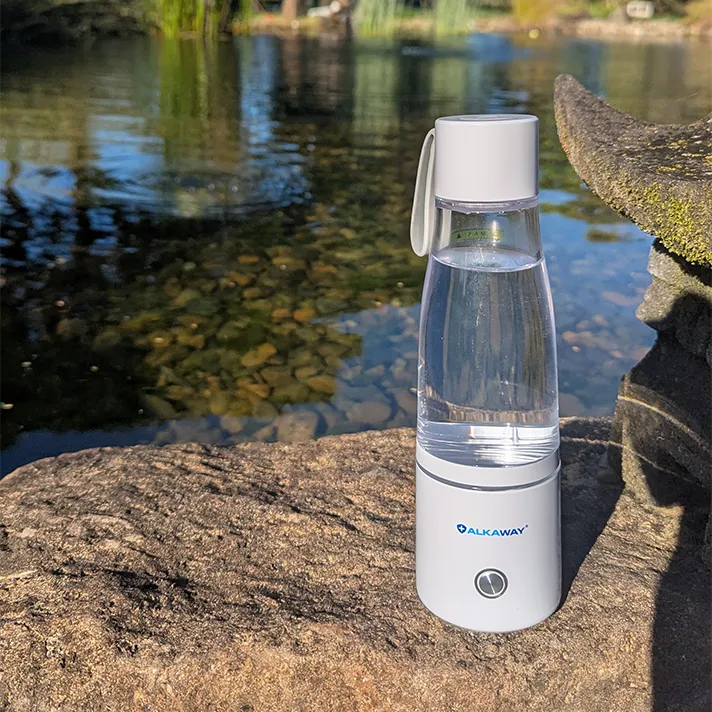
Hydrogen water is simply drinking water that contains dissolved molecular hydrogen gas (H₂). While ordinary water already contains hydrogen atoms as part of the water molecule (H₂O), hydrogen water contains additional hydrogen gas dissolved into the water.
This small change has sparked global interest among researchers, wellness professionals, athletes, and people looking for advanced hydration solutions.
In this complete guide we will explain:
- What hydrogen water is
- How hydrogen water is made
- The science behind molecular hydrogen
- Why people drink hydrogen water
- How hydrogen water differs from alkaline water
- What to look for in hydrogen water systems
What Is Hydrogen Water?
Hydrogen water is water infused with dissolved molecular hydrogen gas (H₂).
Normal drinking water consists of:
H₂O → two hydrogen atoms bonded to one oxygen atom
Hydrogen water contains the same water molecules, but with extra hydrogen gas dissolved into the water.
This additional hydrogen exists as molecular hydrogen (H₂) — the smallest molecule in the universe.
Because hydrogen molecules are extremely small and neutral, they can dissolve into water similarly to how carbon dioxide dissolves in sparkling water.
The result is hydrogen-rich water, sometimes referred to as:
- molecular hydrogen water
- hydrogen-infused water
- hydrogen-rich drinking water
The Science Behind Molecular Hydrogen
Hydrogen is the most abundant element in the universe, making up roughly 75% of all matter.
It is also the smallest molecule known, consisting of just two hydrogen atoms bonded together.
Because of its tiny molecular size, hydrogen gas has some unique characteristics:
- extremely small molecule
- neutral electrical charge
- rapidly diffuses through liquids and tissues
- dissolves into water without altering its structure
Scientific interest in hydrogen water began in 2007, when researchers published a paper suggesting that molecular hydrogen may interact with certain biological pathways related to oxidative stress.
Since then, research into hydrogen has expanded significantly, with studies exploring its interactions with:
- oxidative stress processes
- cellular signalling pathways
- inflammatory pathways
- metabolic systems
Research in this field is ongoing and continues to evolve.
How Hydrogen Water Is Made
Hydrogen water can be produced using several technologies. The most common methods include:
1. Electrolysis
Electrolysis is one of the most widely used methods to generate hydrogen water.
In electrolysis systems:
- An electrical current is passed through water
- Water molecules split into hydrogen and oxygen
- Hydrogen gas dissolves back into the water
Many hydrogen water bottles and hydrogen generators use PEM electrolysis technology to create hydrogen-rich water.
This method allows hydrogen to be generated directly from the water being consumed.
2. Magnesium Reaction
Another method for producing hydrogen water involves a natural reaction between magnesium and water.
The simplified reaction is:
Magnesium + Water → Hydrogen Gas + Magnesium Hydroxide
This reaction produces hydrogen gas, which dissolves into the surrounding water.
Some hydrogen water products use magnesium sticks or cartridges to create hydrogen in this way.
3. Hydrogen Gas Infusion
In some systems, pure hydrogen gas is infused into water under pressure.
This allows higher concentrations of hydrogen to dissolve into the water.
How Much Hydrogen Is in Hydrogen Water?
Hydrogen concentration in water is usually measured in:
PPM (parts per million) or PPB (parts per billion).
Typical hydrogen water concentrations range between:
- 0.5 ppm = 500 ppb
- 1.0 ppm = 1000 ppb
- 1.5 ppm = 1500 ppb
- 2.0+ ppm
Higher concentrations require specialised equipment to generate and maintain dissolved hydrogen.
Because hydrogen gas is very light, it will slowly escape from water over time.
For this reason, hydrogen water is often best consumed shortly after it is produced.
Why Are People Drinking Hydrogen Water?
Interest in hydrogen water has grown because of ongoing research into molecular hydrogen and biological systems.
In laboratory and early human studies, hydrogen has been observed to interact with:
- oxidative stress pathways
- cellular signalling mechanisms
- natural antioxidant systems in the body
Because of this research, hydrogen water is often chosen by people interested in supporting:
- daily hydration
- active lifestyles and recovery routines
- mental clarity and focus
- healthy ageing
- general wellbeing
Hydrogen water is not intended to diagnose, treat, cure, or prevent any disease.
Hydrogen Water vs Alkaline Water
Hydrogen water is often confused with alkaline water, but they are different concepts.
Hydrogen Water
Hydrogen water focuses on molecular hydrogen content.
- contains dissolved hydrogen gas
- hydrogen concentration measured in ppm
- neutral pH in many systems
Alkaline Water
Alkaline water focuses on pH and mineral content.
- higher pH level
- contains alkaline minerals such as calcium or magnesium
- produced through mineral filtration or electrolysis
Some water systems may produce both alkaline water and hydrogen-rich water, but they are not the same thing.
Does Hydrogen Water Taste Different?
Hydrogen gas is:
- colourless
- odourless
- tasteless
Because of this, hydrogen water usually tastes very similar to clean filtered water.
Many people describe it as tasting fresh or smooth, especially when produced from well-filtered water.
The Importance of Water Filtration
Before hydrogen is added to water, it is important that the water itself is clean and free from contaminants.
Modern tap water may contain substances such as:
- chlorine
- heavy metals
- PFAS (“forever chemicals”)
- microplastics
- agricultural chemicals
Using a high-quality water filter can help remove many of these contaminants before hydrogen is added.
Clean water forms the foundation of healthy hydration.
Choosing a Hydrogen Water System
If you are considering hydrogen water, there are several factors to consider.
Hydrogen concentration
Look for systems capable of producing measurable hydrogen levels.
Water filtration
Ideally hydrogen should be added to clean filtered water.
Technology type
Different systems use:
- PEM electrolysis
- magnesium reactions
- hydrogen gas infusion
Ease of use
Portable hydrogen bottles allow hydrogen water to be produced anywhere.
The Future of Hydrogen Water
Hydrogen water is part of a growing field exploring how molecular hydrogen interacts with biological systems.
Research continues in universities and laboratories around the world.
As technology improves, hydrogen water systems are becoming more efficient, portable, and accessible.
For many people, hydrogen water represents an exciting area in the evolution of modern hydration science.
Final Thoughts: What Is Hydrogen Water?
Hydrogen water is drinking water that contains dissolved molecular hydrogen gas (H₂).
It is produced through technologies such as electrolysis, magnesium reactions, or hydrogen infusion.
Interest in hydrogen water comes from growing research into molecular hydrogen and its interactions with biological systems.
As with any hydration solution, the most important starting point is clean, well-filtered water.
When clean water is combined with hydrogen infusion technology, the result is hydrogen-rich drinking water.